
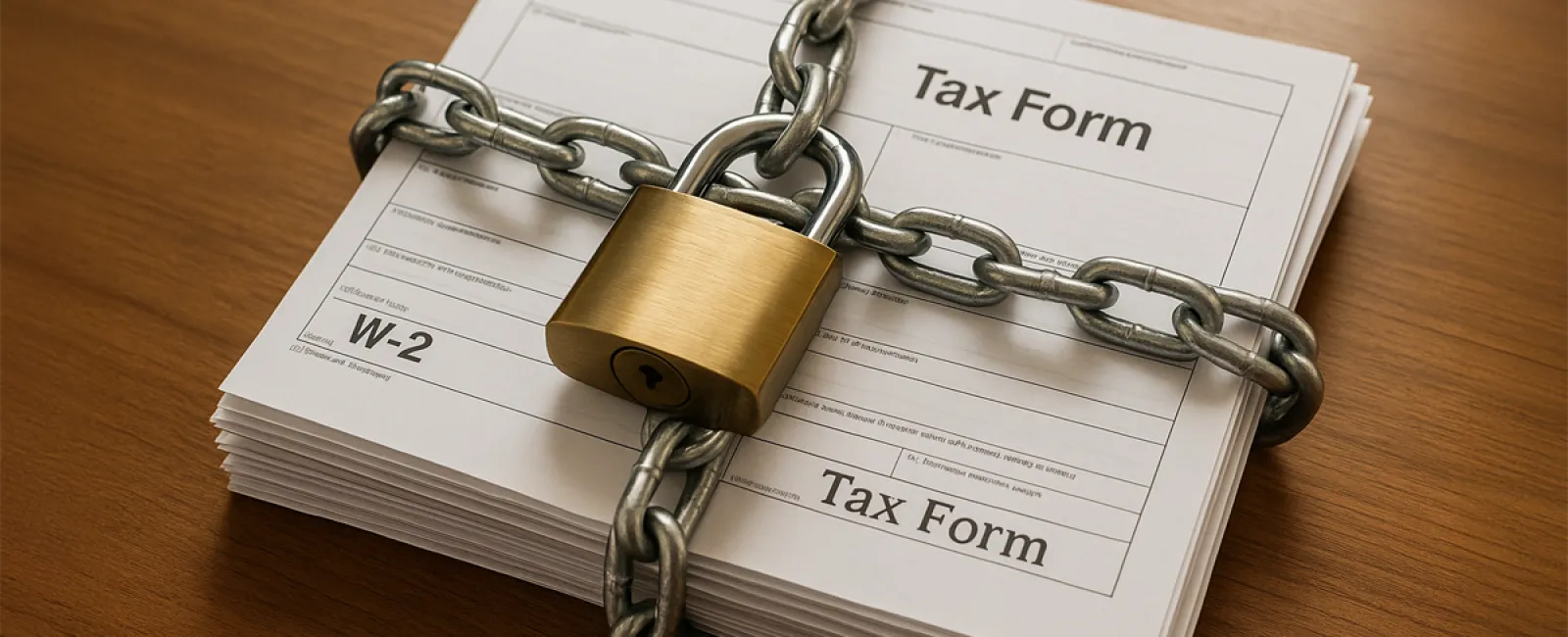
February marks the height of tax season. As your accountant ramps up activity and your bookkeeper gathers essential paperwork, everyone is focused on navigating W-2s, 1099s, and critical deadlines.
But there's a hidden threat often overlooked: the first major tax season challenge is frequently not a form—it's a scam.
One particular scam strikes early, well before April, targeting small businesses with a convincing and straightforward approach. It might already be lurking in an employee's inbox.
The Mechanics of the W-2 Scam
How it unfolds:
An employee responsible for payroll or HR receives an email appearing to come from the CEO, owner, or top executive.
The message is brief, pressing:
"I urgently need copies of all employee W-2s for an upcoming accountant meeting. Can you send them right away? I'm swamped today."
The email seems legitimate, with a natural tone and a believable urgent request during this busy season.
The employee complies and sends the W-2 forms.
However, the email was a fraud, sent by a criminal using a falsified address or a closely resembling domain.
This gives the scammer access to sensitive employee information:
• Full legal names
• Social Security numbers
• Home addresses
• Salary details
Every piece needed for identity theft and for filing false tax returns before your employees can.
The Aftermath: What to Expect
Victims usually discover the breach when:
Employees file their tax returns only to have them rejected with the message, "Return already filed for this Social Security number."
Someone else has already filed using their identity and claimed their tax refund.
Now your employees face IRS investigations, credit monitoring, identity protection services, and months of paperwork—all because of a single deceptive email.
Multiply this across your entire payroll, then consider the impact on trust, HR challenges, liability risks, and your company's reputation.
Why This Scam Is So Effective
This isn't a poorly written phishing attempt. It's crafted to look authentic because:
The timing is flawless. W-2 requests are common in February, so no suspicion arises.
The request is reasonable and routine during tax season.
The urgency feels genuine—"I'm slammed today, please send this over quickly" is plausible in a busy office.
The sender appears legitimate. Attackers research and replicate familiar names and email styles.
Your employees want to help, especially their leadership, making them less likely to second-guess requests.
Protect Your Business Now: Practical Steps
Fortunately, preventing this scam is straightforward and depends more on policy and awareness than technology.
Implement a strict "No W-2s via email" policy. Absolutely no exceptions. Ensure sensitive payroll data never leaves your network as email attachments.
Always verify sensitive information requests through a secondary channel—phone calls, face-to-face, or trusted chat platforms. Never reply to the suspicious email directly.
Hold a quick, 10-minute tax scam briefing with payroll and HR teams immediately. Familiarize them with scam signs before the threat peaks.
Enforce stringent security by enabling multi-factor authentication (MFA) on all systems that handle employee data. MFA acts as a critical barrier if credentials are compromised.
Encourage a culture where verifying unusual requests is rewarded, not penalized. The employee who double-checks is protecting your business.
These five measures are easy to adopt yet powerful enough to defeat the initial surge of tax season scams.
A Broader Threat Landscape
The W-2 scam is just the beginning.
Expect a variety of tax season phishing attacks, including:
• Fake IRS notices demanding immediate payments
• Phishing emails disguised as software updates for tax applications
• Fraudulent messages impersonating your accountant with malicious links
• False invoices appearing as tax-related expenses
Scammers exploit tax season's high pressure and rapid pace when financial requests appear routine.
Businesses that survive tax season unscathed don't rely on luck—they prepare with strong policies, staff training, and robust security systems that intercept threats early.
Is Your Company Secure Ahead of Tax Season?
If you already have these safeguards and training in place, you're leading the pack among small businesses.
If not, now is the moment to act—before the first scam strikes.
If this describes your situation, schedule a quick 15-minute Tax Season Security Review.
During this review, we'll assess:
• Payroll and HR access controls and MFA
• Your W-2 document verification procedures
• Email protections against spoofing attempts
• One critical policy update often overlooked by businesses
And if your business is already protected, consider sharing this information with other business owners who might benefit—help prevent costly scams before they start.
Click here or give us a call at (502) 473-9330 to schedule your free 15-Minute Discovery Call.
Because tax season is already stressful—don't let identity theft add to the burden.