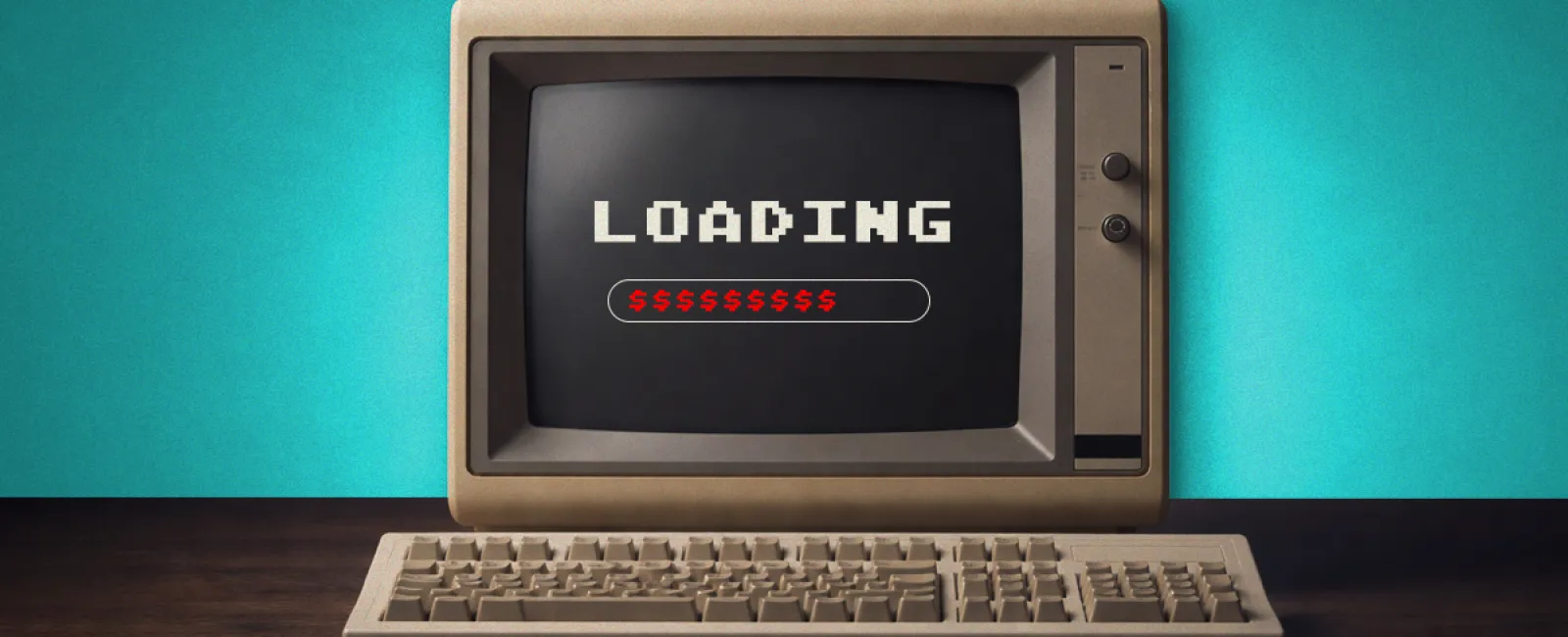
Many businesses keep using outdated technology the way someone keeps wearing a sock with a hole in it—it's clearly worn out, but not quite bad enough to toss yet.
You notice the symptoms in small ways: an email that takes forever to send, a file that won't save without freezing the screen, or a system that seems to stall at the worst possible moment.
It's annoying, but easy to brush off. You keep working, the glitches keep happening, and the problems stay in place.
What feels minor today can quietly drain your budget every month.
When older technology becomes more expensive than it should be
Keeping older equipment in place can seem like the smart, cost-conscious move. If it still works, why replace it?
But aging systems don't just sit quietly in the background. Over time, they create costs that are easy to overlook at first.
Energy usage often climbs because outdated hardware has to work harder to do the same job. It pulls more power, produces more heat, and puts added stress on the rest of your environment, especially in hotter months. Newer systems are designed to be more efficient, using less electricity and running cooler while delivering better performance, which helps reduce long-term operating costs.
Then there's the time impact. Work that used to take minutes starts taking much longer. Applications lag, files open slowly, and small delays become part of the routine. The work still gets done, but it takes more effort and more time than it should, and that lost productivity adds up quickly.
Interruptions become part of the normal flow as well. Systems lock up, connections fail, and constant restarts become a familiar workaround. Even when each interruption only lasts a few minutes, it breaks concentration and drags down overall efficiency.
When you add up the higher utility bills, wasted time, and repeated disruptions, the savings you thought you were keeping start to disappear.
What changes when you stop funding technology problems
Once the recurring issues are resolved and outdated systems are replaced where it makes sense, the improvement is easy to see.
- Systems start properly without delays or extra attempts
- Quick fixes and repeated restarts stop dominating the workday
- Your team spends more time getting work done and less time waiting on technology
- Energy consumption drops as efficient new systems replace outdated hardware
- Expenses tied to downtime and inefficiency begin to decline
The workday becomes smoother, your team stays on task, and you stop paying to keep aging systems barely holding together.
Could it be time to upgrade?
If your systems are sluggish, problems keep coming back, or your team has learned to work around the technology instead of relying on it, you're already paying the price.
The real question is how much longer you want to keep absorbing those costs.
This won't correct itself. It continues to drain your business through lost productivity, higher bills, and interruptions that never seem to end.
That's where we help.
As your IT partner, we do more than solve problems—we help you stop overspending on technology that no longer delivers the value you need.
- We pinpoint which systems are costing you too much
- We help you prioritize what should be replaced now and what can wait
- We recommend practical, right-sized upgrades instead of unnecessary ones
- We manage the transition so your team experiences minimal disruption
- We support and maintain your systems so you don't end up back in the same situation
Instead of guessing or delaying the decision, you'll have a clear path forward and technology that supports your business goals.
Click here or give us a call at (502) 473-9330 to schedule your free 15-Minute Discovery Call.
We'll help you identify what's draining your budget—and what's worth repairing or replacing now.
If you know someone dealing with slow systems and ongoing tech issues, send this their way. They may be paying for the same problems, too.